To email me, click Perry S. Itkin.
Wednesday, October 25, 2006
Mediating Colors – Black and White
To email me, click Perry S. Itkin.
Monday, October 23, 2006
“Fishbowl Mediation”
The Clerk agreed [another good move] but [and you know what that means] would do so on two conditions [here they come!]: [1] He wants the mediation sessions to be open to the public and [2] he wants all five county commissioners to take part in the mediation [Hmmm! What about the Government in the Sunshine Law?!?]. I know, that’s why condition number 1 is in play. However, Florida also has a Government in the Shade Law too [really; I’m not kidding here].
Florida requires governmental entities to conduct their business at meetings open to the public, i.e. “in the sunshine”. F. S. 286.011. However, the legislature created an exception to the sunshine law which permitted any governmental agency, its chief executive and attorney to meet in private [“Government in the Shade”] to discuss settlement negotiations or strategy. Take a look at F.S. 286.011(8) to see how confidentiality in mediation can be synchronized with Government in the Sunshine and the procedures to be followed.
After reading the article, what kind of protocols could be developed to address the concerns expressed by both sides [it can be done, you know]?
By the way, is what the Clerk of Courts suggesting really mediation or is it some other ADR process?
To email me, click Perry S. Itkin.
Sunday, October 08, 2006
The Other Side Of The Coin
What’s in your wallet? Only kidding; I thought these were nice accompaniments to the earlier post about mediating complaints against police officers. Hmmm – maybe police officers trained as mediators will reduce the number of complaints filed against them by civilians [an unintended consequence – or not]!
To email me, click Perry S. Itkin.
“I Can’t Get No Satisfaction!”
What if a civilian could get satisfaction in resolving a complaint against a law enforcement officer? In the early 1990’s, at a time when New York City was rife with police scandals, the Civilian Complaint Review Board was created so that accusations against police officers could be handled by an independent agency. Cases would be investigated and then sent to the full board, which would recommend punishment when wrongdoing was found.
Guess what alternative was included in the enabling law? You guessed it – mediation! One of the reasons for incorporating mediation was to give the civilian the chance to tell the officer why they were so upset with what the officer said or did and to provide the opportunity to the civilian to ask questions of the officer. [Sounds like a good idea to me!] There are criteria for the types of cases that are suitable for this program.
The New York Times has an excellent article [free subscription required – it’s worth it!] about the program which has drawn national and international attention.
How about something like this in your community?
To email me, click Perry S. Itkin.
“I’m Having A Really ‘Bad Hair’ Day!”
One of the learning objectives in our training programs is to identify appropriate techniques for handling difficult situations [of which, I suggest, this would be one] or to identify appropriate courses of action when confronted with substance abuse during the mediation session [community resources and referrals, anyone?].
Florida’s Rules for Certified and Court-Appointed Mediators, Rule 10.420(b) Conduct of Mediation; Adjournment or Termination provides:
A mediator shall:
(1) adjourn the mediation upon agreement of the parties;
(2) adjourn or terminate any mediation which, if continued, would result in unreasonable emotional or monetary costs to the parties;
(3) adjourn or terminate the mediation if the mediator believes the case is unsuitable for mediation or any party is unable or unwilling to participate meaningfully in the process;
(4) terminate a mediation entailing fraud, duress, the absence of bargaining ability, or unconscionability; and
(5) terminate any mediation if the physical safety of any person is endangered by the continuation of mediation.
Which option would you choose? Would you do anything else? Who are you going to call – or not?!?
So, what if it’s not a party who presents the difficult situation [or substance abuse], but rather the party’s lawyer as was reported here on Court TV News? Here’s a clue as to the facts: “I don't think you can tell a straight story because you are intoxicated,” said the trial judge to the lawyer. [You can actually watch a video of the hearing and if you do, note the exceptional demeanor of the judge.]
Go figure!
To email me, click Perry S. Itkin.
Wednesday, October 04, 2006
Dependency Mediation Certification Training
The cost for the training is $975.00, but a special discount rate for early registration of $925.00 will apply until December 1, 2006.
Included with the training package [at no additional charge!] is the Dependency Module of Nutshell Mediation Office, a software program which, among other things, prepares all documentation necessary for dependency mediation.
If you have any questions about the program or to obtain registration information and a registration form, you can email David A. Wolfson by clicking here.
To email me, click Perry S. Itkin.
Wednesday, September 27, 2006
What Kind Of Jury Is This?
To email me, click Perry S. Itkin.
Desperate Mediation
O.K., not really! What about mediating “Desperate Housewives” scenarios, though? It can be done as is reported this article in the Arizona Daily Star. Do you think the scriptwriters are mediators too?!?
To email me, click Perry S. Itkin.
Tuesday, September 26, 2006
Is Duct Tape In Your Mediator’s Toolbox?
This defamation suit was based on how the defendants reported the circumstances surrounding a guardianship. The trial court entered summary judgment in the defendants’ favor and the plaintiff appealed. The appellate court affirmed the summary judgment and sanctioned the appellant’s attorneys for the language they used in their initial and reply briefs.
Before you read the order [oops, too late!], try to figure out how the following terms were used:
Baloney
Fraud on the court
Twilight Zone Doctors
Internet freaks
Internet screwballs
Liars
Internet lynch mob
Elevating porno queens to the level of supreme court judges
Star Chamber proceeding
Poison pen letter
The court held that the arguments presented on appeal were, on their merits, frivolous, and awarded the appellees attorney’s fees for the appeal under F.S. 57.105.
By the way, just in case you are interested you can watch a video of the oral argument here.
To email me, click Perry S. Itkin.
Saturday, September 23, 2006
Cyberweek 2006
Last year, there were several hundred participants from over forty countries.
Here’s the schedule of events.
You can register here. If you have any questions, you can email The Center.
To email me, click Perry S. Itkin.
Thursday, September 21, 2006
Mediating With M&M’s
To email me, click Perry S. Itkin.
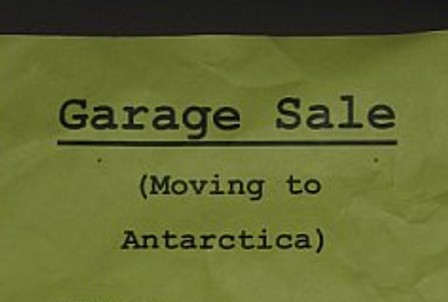
Mediation Sale!
To email me, click Perry S. Itkin.
Wednesday, September 20, 2006
“I Speak Or Understand The Language!”
The court also unanimously agreed that jurors should be instructed that if they question the accuracy of an interpretation they should immediately bring the matter to the judge’s attention by raising a hand and not to comment about the matter in the presence of other jurors.
The justices voted [not unanimously], however, to seek further study before deciding whether that restriction also should apply if the parties disagree on the accuracy of a transcribed translation.
Transform the above scenarios to a mediation conference – you are a bi-lingual or tri-lingual mediator – now, how would you address these situations if they occur in mediation?
To email me, click Perry S. Itkin.
The Hazards of Cultural Interpretation
A plain reading of the correspondence revealed that the defendants were well educated and fluent in English. The trial judge on his own imposed a Haitian cultural interpretation of the language employed in the communications between the parties. This was not an issue raised by the defendants’ motion for summary judgment. As plaintiff’s counsel argued at the hearing, had the motion raised the issue, the plaintiff could have countered with an expert on Haitian culture. [What is the meaning of the word “we” in a cultural context?]
Very interesting! So, is it sufficient to “speak the language” or do we need cultural experts in mediation also?
To email me, click Perry S. Itkin.
Tuesday, September 12, 2006
The Answer: We Don’t Know Yet!
On May 11, 2006 the Florida Supreme Court issued its opinion in In Re: Petition of the Alternative Dispute Resolution Rules and Policy Committee on Amendments to Florida Rules for Certified and Court-Appointed Mediators, 931 So.2d 877 [Fla. 2006] and adopted the new point system for certification as follows:
“We support the new point system in concept and can foresee no drawback to moving to a more practical and non-profession-based point system for certified county court, family, and dependency mediators. However, we are hesitant, at this time, without input from The Florida Bar, to remove the current requirement that a certified circuit court mediator must be a member of The Florida Bar or a retired trial judge from any United States jurisdiction. Therefore, we have modified the point requirements for circuit court mediators to retain this requirement for the time being, pending input from The Florida Bar.”
You can read The Florida Bar’s input here and the ADR Rules and Policy Committee’s response [filed Friday, September 8, 2006].
Now, we wait!
To email me, click Perry S. Itkin.
Monday, September 11, 2006
Nerf Mediation?
Florida’s Rules for Certified and Court-Appointed Mediators, Rule 10.420(b), Conduct of Mediation, Adjournment or Termination provides that a mediator shall [no wiggle room here]
(5) terminate any mediation if the physical safety of any person is endangered by the continuation of mediation.
The Nerf N-Strike Maverick Blaster comes with this warning: “CAUTION: Do not aim at eyes or face. To avoid injury, use only darts designed for this product. Do not modify darts or dart blaster.”
In 2002 during a court–ordered probate mediation, a brother shot his sister to death in front of his wife, an attorney–mediator and the attorneys for the two sides. He fled the office and then killed himself, according to police reports. This article in New York Lawyer [registration required] points out that the shooting in the conference room of a Boca Raton law firm has led to a premises liability lawsuit against the firm that could have important ramifications for attorney–client privilege in Florida [what about mediator’s premises liability had this occurred in a mediator’s office?]. You can read about the privilege aspect of the case in Hodgson Russ LLP v. Trube, et al., 867 So. 2d 1246 [Fla. 4th DCA 2004]. Note that although the opinion refers to a scheduled deposition, it was actually a mediation conference.
Would you consider using Nerf weapons in mediation in Florida? I don’t think so! There are better [and safer] ways for parties to vent; but, you knew that!
To email me, click Perry S. Itkin.
Sunday, September 10, 2006
Charles Darwin – Mediator!
The experts reveal that a substantial portion of our communication is nonverbal – handshakes, facial expressions, gestures, tone of voice, and hairstyle [for those of you who know me, please stop laughing!]. According to this article in About Psychology, research has identified several different types of nonverbal communication. Among them are:
1. Facial expression
2. Gestures
3. Paralinguistics [“Don’t use that tone of voice with me!”]
4. Body language and posture
5. Proxemics [personal space]
6. Eye gaze
7. Haptics [you know, “Reach out and touch someone!”]
8. Appearance
What others can you think of?
Speaking of handshakes, how about hugging as nonverbal communication? Take a look at this article in The Poughkeepsie Journal for an interesting commentary on the personal space invasion.
To email me, click Perry S. Itkin.
Thursday, September 07, 2006
“Make Up Your Mind!”
1. Identify the best decision-making process [how about mediation?!?].
2. Analyze the best data you can find.
3. Aim for a state of clarity – reflect on the problem until you feel absolutely clear and aligned with the particular decision you make.
Do you think mediation parties incorporate these elements “in reaching informed and voluntary decisions” [does this sound at all familiar? Think self-determination.]? This should ring a bell with you. Remember Florida’s Rules for Certified and Court-Appointed Mediators, Rule 10.310(a) Self-Determination:
(a) Decision-making. Decisions made during a mediation are to be made by the parties. A mediator shall not make substantive decisions for any party. A mediator is responsible for assisting the parties in reaching informed and voluntary decisions while protecting their right of self-determination. [Emphasis added.]
Whoa! It’s our responsibility to preserve party self-determination; I believe we need to wonder about the above ingredients and the other concepts revealed in the interview. Don’t you?
To email me, click Perry S. Itkin.
Tuesday, September 05, 2006
Mediating Between Urinals!
To email me, click Perry S. Itkin.
Subscribe to:
Posts (Atom)