Friday, March 21, 2008

Warning – A Kvetch Can Be Dangerous!

Do you have mediator professional liability insurance? If not, why not? If yes, well . . . .

According to this article in the New Jersey Law Journal, the question could be posed another way: How angry do clients have to get before attorneys [substitute ‘mediators’] must warn insurers a suit is possible?

In the ongoing litigation in General Star National Insurance Co. v. Law Offices of Robert A. Olkowitz, P.C., 07-5433, the insurance company asked a federal judge to rule it doesn't have to cover or defend its insured personal injury lawyer in a malpractice case because he didn’t notify the company when a client expressed displeasure with a settlement.

The attorney filed a motion to dismiss asking the judge to declare that a client’s expression of “displeasure” does not, as a matter of law, trigger the responsibility to put a malpractice carrier on notice.

Hmmm!!! Something for mediators to think about. The article is well worth reading!

To email me, click Perry S. Itkin.

Tuesday, November 20, 2007

Florida Supreme Court Removes Bar Membership Requirement for Circuit Court Mediators!

Wow!!! On November 15th the Florida Supreme Court issued In Re: Petition Of The Alternative Dispute Resolution Rules And Policy Committee On Amendments To Florida Rules For Certified And Court-Appointed Mediators, 2007 Fla. LEXIS 2172 [Fla. 2007] in which it amended the Florida Rules for Certified and Court-Appointed Mediators to provide a true point-based mediator certification system by removing The Florida Bar membership requirement for certified Circuit Court Mediators!!!

What a marvelous opportunity for those without legal training, as well as for those who are members of the bar in jurisdictions other than Florida, to become a certified Circuit Court Mediator!

The Court also recognized that there may be situations where one party to a Circuit Court mediation may object to the appointment of a mediator who lacks legal training and if that occurs, the trial court must appoint a mediator who is also a member of The Florida Bar. Florida Rule of Civil Procedure 1.720(f)(2) was amended to reflect this requirement.

Please take the time to read this incredibly important opinion – you’ll be glad you did!!!

Also, if you have any questions please get in touch with me.

To email me, click Perry S. Itkin.

Sunday, September 16, 2007

Mediation Math: Pressure To Go To Mediation + Ineffective Assistance of Counsel = Zero!

How about that?!? Take a look at D.B. v. W.J.P., 32 Fla. L. Weekly D 1737 [Fla. 5th DCA 2007]. This court ordered dependency mediation resulted in an agreement in which the paternal grandmother was given temporary custody of her grandchild. Before the court entered its order approving the agreement, the biological mother objected arguing [1] she was pressured into going to mediation and [2] that she had received incompetent legal advice.

The Fifth District Court of Appeal reversed the trial judge’s order awarding custody to the grandmother because, among other reasons, the biological mother withdrew her consent to the agreement prior to the entry of the court order and she was entitled to a hearing. There’s more to this opinion which is worthwhile reading – i.e., collateral attacks on mediated settlement agreements [although it’s addressed in a footnote] as well as the rights of biological parents versus grandparents.

To email me, click Perry S. Itkin.

Tuesday, September 11, 2007

Seriously – We Need Your Help With This!

The Florida Supreme Court’s Committee on Alternative Dispute Resolution Rules and Policy is considering some options to address the issue created by the adoption of Florida’s “Mediation Confidentiality and Privilege Act”, sections 44.401- 44.406, of Chapter 44, Florida Statutes, in relation to the reporting of a failure of a party to appear pursuant to court rules (See Rule 1.720(b), Florida Rules of Civil Procedure; Rule 8.290(l), Florida Rules of Juvenile Procedure [PDF only]; and Rule 12.741, Florida Family Law Rules of Procedure).

The problem: Party representatives are showing up at court-ordered mediations without the authority to settle the case as required by the Florida Rules of Procedure (and Mediation Referral Orders entered by the presiding judge). Procedures to sanction or deter this behavior are frustrated by the “Florida Mediation Confidentiality and Privilege Act,” which prohibits both the mediator and mediation participants from revealing mediation communications. The fact that a party has appeared at the mediation without adequate authority cannot come to the attention of the court. Take a look at MEAC 2006-003.

Here’s where you can help: The ADR Rules and Policy Committee have come up with two possible alternatives to address this issue and would like your comments. Please follow this link to view two proposals and please provide your input.

To email me, click Perry S. Itkin.

The “Emperor’s New Clothes” and Mediation!

Guido and Luigi Farabutto were the world’s first pre-suit mediators! Who, you ask, are they? These men were the tailors [swindlers, actually] made famous by Hans Christian Anderson and who made the Emperor’s “new clothes” [pre-suit – get it?!?] Okaaaaaaaay!?!

Well, the Florida Legislature actually gave us some good ideas in the newly amended mandatory pre-suit mediation protocol for community association – parcel owner disputes, F.S. 720.311.

You might find useful information to include in your confirmation letter [you do use one, don’t you?!?] such as mediation advance deposits [excellent choice!] and preparation time. Anyway, these are some things to think about.

To email me, click Perry S. Itkin.

Thursday, August 30, 2007

The Beatles: Ethical Mediators – “You Can’t Do That!”

The year was 1964 and The Beatles recorded You Can’t Do That as the B-side of the single Can’t Buy Me Love – you remember both songs, right?!? Seems just like Yesterday – sorry, I couldn’t resist!

Anyway, have you ever been presented with the situation in mediation where one or both of the parties have brought [usually, unannounced] a non-party to the table – of course you have! The party who brought this person says “yes they’ll stay” and the other party says “no” – or, to put it another way, “you say yes, I say no” or vice versa, “you say goodbye and I say hello.” Can’t you just hear it – Hello Goodbye [thank you, Beatles]!

Okay, back to 2007! What about the situation where each party brought a non-party with them and both parties not only agree but also insist that both of the non-parties can attend the mediation?

Is it permissible for a mediator to dictate, over the parties’ objections, who attends mediation? Think like The Beatles!

Is it appropriate for the mediator to instruct non-parties they can not participate in mediation because the mediation is confidential? Think like The Beatles!

Is it a violation of confidentiality for a mediator to direct a party or parties that s/he can discuss mediation communications with someone who does not attend the mediation without consent of all parties? Think like MEAC!

What if the court order to mediate limits attendance to the named parties only? Think . . . .

Actually, you’ll find instructive answers to the above questions in two recent MEAC Opinions –2006-007 and 2007-2004. Take a look, they are very worthwhile!

Have a happy and safe Labor Day Weekend!

To email me, click Perry S. Itkin.

Sunday, July 01, 2007

Concetta Rosa Maria Franconero – Mediator!

Who?!? Okay, okay! How about this: Connie Francis – Mediator! You remember her 1958 hit "Who’s Sorry Now?" [Please say yes!] The song actually was featured in the Marx Brothers’ film A Night in Casablanca (1946) and has become generally associated with her due to the massive worldwide popularity of her version.

Anyway, here’s a terrific article entitled “The Art and Power of the Apology.” It appears in the June, 2007 issue of The Washington Lawyer. In it Sarah Kellogg examines the mounting evidence showing that candidness coupled with apology can reduce lawsuits.

Among the topics covered are:

What Makes a Good Apology?
Corporate Apologies
Apologies in the Health Care Arena
Dispute Resolution in the Workplace
Wariness of the Legal Community

It’s worth reading!

To email me, click Perry S. Itkin.

Thursday, May 31, 2007

Do I Or Don’t I . . .

. . . routinely attach the mediated settlement agreement in a Circuit Civil case to the report I file with the Court?

Hmmm?!?

Okay, the answer is found in MEAC Opinion 2007-002 which provides, in summary, that “it would not be appropriate to routinely attach the mediated settlement agreement to a circuit civil case in light of the requirements of rule 1.730(b), Florida Rules of Civil Procedure.”

It is important to remember the following requirement from that rule:

The mediator shall report the existence of the signed or transcribed agreement to the court without comment within 10 days thereof. [Emphasis added.]

There’s more to this opinion which is worthwhile reading.

To email me, click Perry S. Itkin.

Wednesday, May 30, 2007

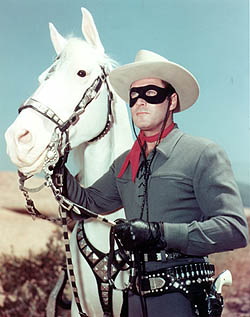
The Lone Ranger – Mediator!

A fiery horse with the speed of light, a cloud of dust and a hearty “Hi-Yo Silver!” The Lone Ranger rides again! Return with us now to those Thrilling Days of Yesteryear!

Remember this?!? [Please say yes!]

Okay, okay, The Lone Ranger was not a mediator – he could have been though, don’t you think? For example, he was the first to use the “silver bullet” technique often used by mediators today. According to this article in The Plain Dealer, a variation of this technique was recently used successfully.

Do you know what the silver bullet stood for? Me neither! [At least I didn’t remember - uh oh!] It was The Lone Ranger’s symbol of justice! It stood for law and order, fair play and honesty and served as a reminder to the Lone Ranger of his vows to fight for justice and never shoot to kill [i.e. get an agreement in mediation no matter what it takes]. So, don’t you think he could have been a mediator?

By the way, if you want to listen to the entire theme song, click here.

To email me, click Perry S. Itkin.

Friday, May 11, 2007

Are You Comprehensible?

One of the learning objectives in mediation training is to develop an awareness that people differ in how they make decisions, how they process information, and how they communicate.

U.S. Bankruptcy Judge Leif M. Clark (W.D. Tex.) entered an order captioned “Order Denying Motion for Incomprehensibility” when he couldn’t figure out what the defendant was requesting. As part of the authority for the order, the judge relied on the 1995 comedy “Billy Madison” starring former Saturday Night Live cast member Adam Sandler.

Mediation is based on concepts of communication and one of the roles of the mediator is to reduce obstacles to communication. All to say [pun intended], how mediators and mediation participants communicate is critical [but you knew that, right?!?].

Read the order – it will make you laugh [okay, maybe just smile] – it’s a nice way to start the weekend!

To email me, click Perry S. Itkin.
Sunday, April 15, 2007

“Where Have All The Flowers Gone?”

Nope, I’m not referring to Pete Seeger’s song with the same name and made popular by The Kingston Trio, Peter, Paul and Mary and Marlene Dietrich – what I really meant to say was [quoting from the song] “When will they ever learn?” [You remember the lyrics, right?!? Please say yes!]

According to the St. Petersburg Times in this article “Traditional divorces don’t always go to trial. Many go to mediation, where an arbitrator stays neutral while everyone else takes sides.” Go figure!!!

To email me, click Perry S. Itkin.

Saturday, April 14, 2007

“Yes, Virginia . . .”

Okay, I realize it’s a little early for Christmas, however, the Virginia Chapter of the Association for Conflict Resolution is celebrating its 10th anniversary in Fredericksburg, Virginia at its annual spring conference May 6 – 7, 2007.

Ray Lanier, President of the Association for Conflict Resolution will address “State of the Field: What are the trends and challenges in the field of conflict resolution? How is ACR doing?”

Celebrate with them and participate in valuable networking and learning opportunities.

Here’s the Conference Brochure, Registration Form, and Hotel Information.

Happy Anniversary!

To email me, click Perry S. Itkin.

Monday, April 09, 2007

“But Judge, I Really Want To Mediate!”

Coastal Systems Development, Inc. v. Bunnell Foundation, Inc., 2007 Fla. App. LEXIS 4900 [Fla. 3rd DCA 2007] involved a consolidated appeal from the trial court’s non-final order denying a motion to compel mediation, for stay pending arbitration and to strike notice for trial, as well as the trial court’s non-final order denying a motion to compel arbitration.

In this breach of contract action, Appellant moved to dismiss the complaint based on a mediation provision contained in the contract. The trial court heard Appellant’s motion to stay the proceedings pending mediation and denied it because Appellant would not provide Appellee with a copy of certain financial documents in connection with the project [under the contract the parties were to share equally in all profits]. The trial court reasoned that Appellee could not determine the profits thereby making mediation useless without Appellant’s production of the requested documents [imagine that!!].

Appellant obtained new counsel who filed another motion to compel mediation, even though the trial court previously had ruled on the issue. Guess what – denied!

The Third District Court of Appeal held that the trial court properly denied Appellant’s motion to compel mediation and to abate the action pending mediation – the motion had been previously denied. The prior denial of mediation was not an appealable order. Twice denied – twice non-appealable!

The opinion also addresses Appellant’s waiver of its right to arbitrate by actively participating in the lawsuit.

To email me, click Perry S. Itkin.
Friday, April 06, 2007

“The Other Side Is Paying For Mediation – Not Me!”

Never happened to you – right?!? What can you properly report to the court? MEAC Opinion 2006-008 advises that “The mediator may report the fact of nonpayment of mediation fees to the court.”

In MEAC Opinion 95-001, MEAC advised that “a mediator . . . is entitled to compensation at the time the services are rendered in accordance with the agreement of the parties or the Court order appointing the mediator.” In the same Opinion, MEAC said that if a mediator is not paid, “the mediator may seek payment in any lawful manner” which includes the “filing of a separate lawsuit or the filing of a motion with the presiding judge seeking payment of the mediator’s fee.”

What about confidentiality, you wonder [you did wonder about that, right?!?]. Well, according to MEAC there is no statutory confidentiality restriction on reporting that the fees were not paid since the mediator would not be relying on a “mediation communication” as defined in F.S. 44.403(1) – that is to say, the mediator would not [repeat, would not] report to the Court that the party stated s/he would not pay.

How about that?!?

By the way MEAC Opinion 2006-008 also advises that “a mediator may report to the court that a party or counsel has failed to attend a mediation if this conclusion is based on observation by the mediator and is not dependent on a “mediation communication.”

To email me, click Perry S. Itkin.

Wednesday, April 04, 2007

Settle Or Go Directly To Jail!

No – really – this actually happened! According to this article from WMBB-TV News and this article from WJHG-TV News, the creator of “Girls Gone Wild” was found in contempt by a Federal Court judge as a result of his conduct during mediation last month.

Attorneys for the Plaintiffs filed a motion asking for reimbursement of expenses they incurred while preparing for the mediation in which they say the Defendant was uncooperative. The Plaintiffs’ attorneys testified that the Defendant arrived late, barefoot, wearing a backwards ball cap and sweatpants and in the first 3 minutes of the mediation, began shouting obscenities at them. Their motion says “As the plaintiff’s attorneys were leaving, [the] threats escalated – i.e. “We will bury you and your clients!”

The judge found the Defendant in contempt of court for his actions and ordered him to either settle the case with the plaintiffs or surrender to U.S. Marshals by 5:30p.m. on a Friday evening. Later he was given an extension until Saturday at 5:00p.m. If both sides could not reach an agreement in the case by then the Defendant was to be held in the Bay County Jail until another mediation can be scheduled and completed.

All’s well that ends . . . . In today’s edition of WMBB-TV News, the Defendant was ordered to surrender at the Federal Courthouse by noon tomorrow because the judge found that the Defendant mislead the other side with an offer to settle which he later took back [imagine that!].

Among the learning objectives in mediation training is to identify appropriate techniques for handling difficult situations, e.g., a party walks out, a party makes personal attacks on another party or mediator, or a party is not really engaged in the mediation.

So, if you were the mediator in this case, what techniques would you employ?

To email me, click Perry S. Itkin.

Mediating In The Dark!

Okay, not really in the dark – but what about mediating for a very, very, very long, long session – i.e. the “marathon mediation” [start early – stay late – keep the light on for you]? Have you ever had that experience or heard an anecdote about one? Here’s a criminal case with an interesting parallel and lessons for us.

The First District Court of Appeal in Green v. State, 32 Fla. L. Weekly D 691 (Fla. 1st DCA 2007), affirmed a jury’s guilty verdict in a case where at approximately 4:00p.m. defense counsel requested that the trial be adjourned and resumed the next day so that the jury would have enough time review all the evidence. The trial judge asked the jury what they wanted to do and they decided to work into the night [sound familiar?!?]. Two jurors had to go to work the next day. Closing arguments concluded at 9:20p.m. and the jury returned its verdicts shortly after midnight.

While the general proposition is that jury trials should not continue late into the evening, the appellate court affirmed the jury’s verdict because the trial judge had asked the jurors what they wanted to do, and the court repeatedly checked their mental state to make sure they could continue with their deliberations [excellent practice for mediators to keep in mind!].

This opinion is worth reading for other practice ideas as well.

To email me, click Perry S. Itkin.
Wednesday, March 28, 2007

“It’s Clear To Me.” “Me Too.”

This case from the Third District Court of Appeal is a good illustration of a peril for mediation in not having releases drafted at the mediation conference [or at least the mediator requesting that counsel bring proposed releases to mediation for discussion].

The parties agreed to exchange general releases and other related documents as per the terms of the settlement agreement. Guess what?!? As Gomer Pyle used to say “Surprise; surprise; surprise!” – the parties were unable to agree on the language of the releases required under the settlement agreement.

Appellee filed a motion to enforce the settlement agreement, alleging that pursuant to its clear and unambiguous terms the other party was required to execute a general release containing certain language and the other party argued that the plain and unambiguous language of the settlement agreement did not require such language.

Appellant appealed the trial court’s order enforcing the agreement alleging that since the language in the settlement agreement is susceptible to more than one reasonable meaning, it is ambiguous, and consequently, the trial court erred in resolving Appellee’s motion as a matter of law without holding an evidentiary hearing to determine the intention of the parties. The appellate court agreed, reversed and remanded to the trial court for an evidentiary hearing to resolve the ambiguity based on all of the relevant evidence bearing on the issue.

Although it’s not clear from the opinion that the settlement in this case occurred in mediation, it’s important to remember that, pursuant to Florida Rules for Certified and Court-Appointed Mediators, Rule 10.420(c), Conduct of Mediation, Closure,

The mediator shall cause the terms of any agreement reached to be memorialized appropriately and discuss with the parties and counsel the process for formalization and implementation of the agreement.

A good mediator question to ask in this scenario would be, “What if the general releases are not exchanged?” Hmmm!?!

To email me, click Perry S. Itkin.
Tuesday, March 27, 2007

The Mediator Who Wasn’t!

Huh?!? According to the Sun-Sentinel in this article, Rachel Otto who has been arrested for impersonating a police officer also has been accused of impersonating a mediator or lawyer or both.

She has a pending court case involving allegations that she pretended to be an attorney and charged her 70 year old neighbor more than $10,000 for her “mediation” in a car crash, according to police reports.

Last June her neighbor reported to police that Otto had committed a fraud against him. He told police that a month after he was involved in a car crash, he found a note from Otto on his front door claiming that detectives had come to her door asking about him. The note urged him to call Otto because she was a lawyer and wanted to discuss what the police had told her.

A woman then called him, identifying herself as a detective, warning him he would be arrested if he did not pay money to the other party in the crash. He then called Otto, who told him she could “mediate” the case. The 70 year old gave Otto $2,000 of his own money and borrowed money from friends for a total of $10,600, to settle the case and pay Otto, according to police reports.

By the way, if you’re not sure who you are, you can take this free [really!] Enneagram test from the Enneagram Institute.

To email me, click Perry S. Itkin.

Saturday, March 24, 2007

Be Careful Of What You Don’t Ask For!

If you don’t ask . . . well, you know!

In Evanston Insurance Company v. Advanced Transportation Solutions, LLC, et al., 32 Fla. L. Weekly D 526 [Fla. 3rd DCA 2007], a personal injury action was settled at mediation between the plaintiffs and 3 different insurance carriers. All the parties signed a General Release, Hold Harmless and Indemnity Agreement in which they agreed not to litigate against each other. Then [you figured something was coming – right!] one of the insurance companies sought to recover its attorneys fees from one of the other carriers.

The Third District Court of Appeal held “tough” [only kidding – sort of!] – what they really held was that the carrier seeking contribution for attorney’s fees waived its right to do so when it entered into the Release Agreement without preserving its right to seek contribution.

Evanston had every opportunity to create such an agreement, particularly since Evanston was a participant at mediation during the negotiation and settlement of {Plaintiff’s} complaint.

There’s more to read in this short and informative opinion.

To email me, click Perry S. Itkin.

Tuesday, March 20, 2007

MEAC Opinions – Now Online By Subject Matter!

Whoa! You’re really going to like this!

Florida’s Dispute Resolution Center has now made available online, Mediator Ethics Advisory Committee [MEAC] opinion summaries [with links to all the opinions themselves] from 1994 to 2007 organized by subject matter. Here you’ll find opinions on:

Advertising/Solicitation

Advice Opinions or Information

Business Practices

Confidentiality

Conflicts of Interests

Procedures

This is a treasure trove!

To email me, click Perry S. Itkin.