Sunday, October 08, 2006

The Other Side Of The Coin

Here’s an article in The Oregonian about police officers in Hillsboro, Oregon training as mediators and here’s another article about types of disputes that police officers might mediate.

What’s in your wallet? Only kidding; I thought these were nice accompaniments to the earlier post about mediating complaints against police officers. Hmmm – maybe police officers trained as mediators will reduce the number of complaints filed against them by civilians [an unintended consequence – or not]!

To email me, click Perry S. Itkin.

“I Can’t Get No Satisfaction!”

With the exception of the title of their 1965 hit song, The Rolling Stones have nothing to do with this.

What if a civilian could get satisfaction in resolving a complaint against a law enforcement officer? In the early 1990’s, at a time when New York City was rife with police scandals, the Civilian Complaint Review Board was created so that accusations against police officers could be handled by an independent agency. Cases would be investigated and then sent to the full board, which would recommend punishment when wrongdoing was found.

Guess what alternative was included in the enabling law? You guessed it – mediation! One of the reasons for incorporating mediation was to give the civilian the chance to tell the officer why they were so upset with what the officer said or did and to provide the opportunity to the civilian to ask questions of the officer. [Sounds like a good idea to me!] There are criteria for the types of cases that are suitable for this program.

The New York Times has an excellent article [free subscription required – it’s worth it!] about the program which has drawn national and international attention.

How about something like this in your community?

To email me, click Perry S. Itkin.

“I’m Having A Really ‘Bad Hair’ Day!”

Picture this – you’re the mediator [ok, you knew that was coming]. During the mediation you discern that one of the parties is, well – stoned! What do you do? This is not as far fetched as you might think – take a look at this article in the New Jersey Law Journal [ok, it wasn’t a mediation but it could happen, right?!?].

One of the learning objectives in our training programs is to identify appropriate techniques for handling difficult situations [of which, I suggest, this would be one] or to identify appropriate courses of action when confronted with substance abuse during the mediation session [community resources and referrals, anyone?].

Florida’s Rules for Certified and Court-Appointed Mediators, Rule 10.420(b) Conduct of Mediation; Adjournment or Termination provides:

A mediator shall:

(1) adjourn the mediation upon agreement of the parties;

(2) adjourn or terminate any mediation which, if continued, would result in unreasonable emotional or monetary costs to the parties;

(3) adjourn or terminate the mediation if the mediator believes the case is unsuitable for mediation or any party is unable or unwilling to participate meaningfully in the process;

(4) terminate a mediation entailing fraud, duress, the absence of bargaining ability, or unconscionability; and

(5) terminate any mediation if the physical safety of any person is endangered by the continuation of mediation.


Which option would you choose? Would you do anything else? Who are you going to call – or not?!?

So, what if it’s not a party who presents the difficult situation [or substance abuse], but rather the party’s lawyer as was reported here on Court TV News? Here’s a clue as to the facts: “I don't think you can tell a straight story because you are intoxicated,” said the trial judge to the lawyer. [You can actually watch a video of the hearing and if you do, note the exceptional demeanor of the judge.]

Go figure!

To email me, click Perry S. Itkin.

Wednesday, October 04, 2006

Dependency Mediation Certification Training

You might be interested in this! A Dependency Mediation Certification Training program is being offered by David A. Wolfson, Primary Trainer, from February 7 – 11, 2007 in Tallahassee, Florida.

The cost for the training is $975.00, but a special discount rate for early registration of $925.00 will apply until December 1, 2006.

Included with the training package [at no additional charge!] is the Dependency Module of Nutshell Mediation Office, a software program which, among other things, prepares all documentation necessary for dependency mediation.

If you have any questions about the program or to obtain registration information and a registration form, you can email David A. Wolfson by clicking here.

To email me, click Perry S. Itkin.

Wednesday, September 27, 2006

What Kind Of Jury Is This?

Do you think it’s a jury of your peers? Yes and . . . . It’s actually a group of Small Claims Mediators in Leon County [Tallahassee], Florida – see, they really are a jury of your “mediator peers!” Here’s one article and here’s another [nice to see my friends David Wolfson – the ADR Director for the 2nd Judicial Circuit, and Mark Palmquist, Mediation Coordinator, given recognition for their dedication and good work] from the Tallahassee Democrat about the Small Claims program and contributions that mediators make to the judicial system.

To email me, click Perry S. Itkin.

Desperate Mediation

O.K., not really! What about mediating “Desperate Housewives” scenarios, though? It can be done as is reported this article in the Arizona Daily Star. Do you think the scriptwriters are mediators too?!?

To email me, click Perry S. Itkin.

Tuesday, September 26, 2006

Is Duct Tape In Your Mediator’s Toolbox?

Have you ever been in a mediation where one of the mediation participants was verbally attacking another mediation participant [or even you the mediator]? Among the techniques we learn in mediation training is what to do in those instances. Take a look at the First District Court of Appeal Order to Show Cause in Thomas v. Patton, et al., 2006 Fla. App. LEXIS 15403 [Fla. 1st DCA 2006] to see how the judges addressed that type of conduct and how unimpressive it was to the appellate court.

This defamation suit was based on how the defendants reported the circumstances surrounding a guardianship. The trial court entered summary judgment in the defendants’ favor and the plaintiff appealed. The appellate court affirmed the summary judgment and sanctioned the appellant’s attorneys for the language they used in their initial and reply briefs.

Before you read the order [oops, too late!], try to figure out how the following terms were used:

Baloney
Fraud on the court
Twilight Zone Doctors
Internet freaks
Internet screwballs
Liars
Internet lynch mob
Elevating porno queens to the level of supreme court judges
Star Chamber proceeding
Poison pen letter

The court held that the arguments presented on appeal were, on their merits, frivolous, and awarded the appellees attorney’s fees for the appeal under F.S. 57.105.

By the way, just in case you are interested you can watch a video of the oral argument here.

To email me, click Perry S. Itkin.

Saturday, September 23, 2006

Cyberweek 2006

The University of MassachusettsCenter for Information Technology and Dispute Resolution and the InternetBar.org are offering their annual all-online [and totally free] Cyberweek conference to be held September 25 - 29, 2006. Cyberweek 2006: Shaping the Future of ODR and Online Justice will consist of many different kinds of content related to the field of online dispute resolution, from Skypecasts to meetings in virtual worlds to Podcasts to discussion forums and more.

Last year, there were several hundred participants from over forty countries.

Here’s the schedule of events.

You can register here. If you have any questions, you can email The Center.

To email me, click Perry S. Itkin.

Thursday, September 21, 2006

Mediating With M&M’s

According to this article from ABC News, rapper Eminem and his wife Kimberley Mathers will be mediating issues stemming from their prenuptial agreement. How would you treat celebrities if they are parties in one of your mediations? Could you remain impartial and neutral? Would you keep an originally signed mediation agreement or an originally signed confidentiality agreement? Just food [or M&M’s] for thought – sorry, I couldn’t resist that one!

To email me, click Perry S. Itkin.

Mediation Sale!

According to this news release, the NASD announced its annual Mediation Settlement Month will take place in October and will offer incentives and special programs designed to promote mediation. By reducing rates and hosting these educational events, the NASD hopes to encourage parties to try mediation for the first time and to reinforce its value and effectiveness to those who have benefited from it in the past.

To email me, click Perry S. Itkin.

Wednesday, September 20, 2006

“I Speak Or Understand The Language!”

Although this is not arithmetic [you remember that term, right?!?], there are pluses and minuses here. The Florida Supreme Court decided in the case of In Re: Standard Jury Instructions in Criminal and Civil Cases, 31 Fla. L. Weekly S 581 [Fla. 2006] that jurors should be instructed they cannot use their own knowledge of foreign languages to decide whether a courtroom translation is correct if all parties to a case agree on its accuracy.

The court also unanimously agreed that jurors should be instructed that if they question the accuracy of an interpretation they should immediately bring the matter to the judge’s attention by raising a hand and not to comment about the matter in the presence of other jurors.

The justices voted [not unanimously], however, to seek further study before deciding whether that restriction also should apply if the parties disagree on the accuracy of a transcribed translation.

Transform the above scenarios to a mediation conference – you are a bi-lingual or tri-lingual mediator – now, how would you address these situations if they occur in mediation?

To email me, click Perry S. Itkin.

The Hazards of Cultural Interpretation

The 4th District Court of Appeal, in Basha v. Dorelien, 2006 Fla. App. LEXIS 15468 [Fla. 4th DCA 2006], illustrates the hazards of making cultural interpretations. The plaintiff argues on appeal that the trial judge erred in granting a motion for summary judgment because the motion was facially insufficient, genuine issues of material fact existed, and the court improperly based its decision on an issue not raised in the motion [imposing a Haitian cultural interpretation on the words employed in an e-mail]. The appellate court agreed.

A plain reading of the correspondence revealed that the defendants were well educated and fluent in English. The trial judge on his own imposed a Haitian cultural interpretation of the language employed in the communications between the parties. This was not an issue raised by the defendants’ motion for summary judgment. As plaintiff’s counsel argued at the hearing, had the motion raised the issue, the plaintiff could have countered with an expert on Haitian culture. [What is the meaning of the word “we” in a cultural context?]

Very interesting! So, is it sufficient to “speak the language” or do we need cultural experts in mediation also?

To email me, click Perry S. Itkin.

Tuesday, September 12, 2006

The Answer: We Don’t Know Yet!

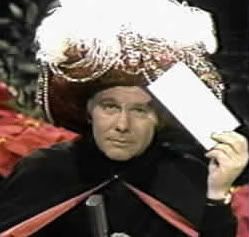
The Question [do you feel a little like Johnny Carson’s Carnac The Magnificent?]: Am I still required to be a Florida lawyer or retired trial judge to be a Circuit Court Mediator???

On May 11, 2006 the Florida Supreme Court issued its opinion in In Re: Petition of the Alternative Dispute Resolution Rules and Policy Committee on Amendments to Florida Rules for Certified and Court-Appointed Mediators, 931 So.2d 877 [Fla. 2006] and adopted the new point system for certification as follows:

“We support the new point system in concept and can foresee no drawback to moving to a more practical and non-profession-based point system for certified county court, family, and dependency mediators. However, we are hesitant, at this time, without input from The Florida Bar, to remove the current requirement that a certified circuit court mediator must be a member of The Florida Bar or a retired trial judge from any United States jurisdiction. Therefore, we have modified the point requirements for circuit court mediators to retain this requirement for the time being, pending input from The Florida Bar.”

You can read The Florida Bar’s input here and the ADR Rules and Policy Committee’s response [filed Friday, September 8, 2006].

Now, we wait!

To email me, click Perry S. Itkin.

Monday, September 11, 2006

September 11, 2001


We Will Always Remember!

Nerf Mediation?

Whaaat?!? According to this article in the Wisconsin State Journal some mediators in Wisconsin let clients shoot each other with foam-rubber Nerf weapons as a form of venting. Is this a good idea?

Florida’s Rules for Certified and Court-Appointed Mediators, Rule 10.420(b), Conduct of Mediation, Adjournment or Termination provides that a mediator shall [no wiggle room here]

(5) terminate any mediation if the physical safety of any person is endangered by the continuation of mediation.

The Nerf N-Strike Maverick Blaster comes with this warning: “CAUTION: Do not aim at eyes or face. To avoid injury, use only darts designed for this product. Do not modify darts or dart blaster.”

In 2002 during a court–ordered probate mediation, a brother shot his sister to death in front of his wife, an attorney–mediator and the attorneys for the two sides. He fled the office and then killed himself, according to police reports. This article in New York Lawyer [registration required] points out that the shooting in the conference room of a Boca Raton law firm has led to a premises liability lawsuit against the firm that could have important ramifications for attorney–client privilege in Florida [what about mediator’s premises liability had this occurred in a mediator’s office?]. You can read about the privilege aspect of the case in Hodgson Russ LLP v. Trube, et al., 867 So. 2d 1246 [Fla. 4th DCA 2004]. Note that although the opinion refers to a scheduled deposition, it was actually a mediation conference.

Would you consider using Nerf weapons in mediation in Florida? I don’t think so! There are better [and safer] ways for parties to vent; but, you knew that!

To email me, click Perry S. Itkin.

Sunday, September 10, 2006

Charles Darwin – Mediator!

Well, I don’t know about that although I bet he would have been a good communicator! The Expression of the Emotions in Man and Animals is a book by the British naturalist Charles Darwin published in 1872, on how animals and humans express and signal to others their emotions. It was the beginning of scientific research on nonverbal communication.

The experts reveal that a substantial portion of our communication is nonverbal – handshakes, facial expressions, gestures, tone of voice, and hairstyle [for those of you who know me, please stop laughing!]. According to this article in About Psychology, research has identified several different types of nonverbal communication. Among them are:

1. Facial expression
2. Gestures
3. Paralinguistics [“Don’t use that tone of voice with me!”]
4. Body language and posture
5. Proxemics [personal space]
6. Eye gaze
7. Haptics [you know, “Reach out and touch someone!”]
8. Appearance

What others can you think of?

Speaking of handshakes, how about hugging as nonverbal communication? Take a look at this article in The Poughkeepsie Journal for an interesting commentary on the personal space invasion.

To email me, click Perry S. Itkin.

Thursday, September 07, 2006

“Make Up Your Mind!”

Did you ever wonder what the ingredients of the “right decision” are? Okay . . . well, just in case you did you’ll find some answers in this interview with Luda Kopeikina in MITSloan Management Review. For starters [and you should read the interview], here are three elements:

1. Identify the best decision-making process [how about mediation?!?].

2. Analyze the best data you can find.

3. Aim for a state of clarity – reflect on the problem until you feel absolutely clear and aligned with the particular decision you make.

Do you think mediation parties incorporate these elements “in reaching informed and voluntary decisions” [does this sound at all familiar? Think self-determination.]? This should ring a bell with you. Remember Florida’s Rules for Certified and Court-Appointed Mediators, Rule 10.310(a) Self-Determination:

(a) Decision-making. Decisions made during a mediation are to be made by the parties. A mediator shall not make substantive decisions for any party. A mediator is responsible for assisting the parties in reaching informed and voluntary decisions while protecting their right of self-determination. [Emphasis added.]

Whoa! It’s our responsibility to preserve party self-determination; I believe we need to wonder about the above ingredients and the other concepts revealed in the interview. Don’t you?

To email me, click Perry S. Itkin.

Tuesday, September 05, 2006

Mediating Between Urinals!

Will wonders [and mediation] never cease and – wait – it’s not what you may be thinking!!! According to this article from KYW Newsradio in Philadelphia, plans for the new Comcast Center tower to be built in Center City call for waterless urinals. The urinals save water and they also use less plumbing than the traditional urinals [translation, less work for plumbers]. A city hall source says the plumbers union is “dragging its feet” as the developer seeks the necessary change to the city building code to allow the new devices. A state senator has been “mediating.”

To email me, click Perry S. Itkin.

Thursday, August 31, 2006

Huckleberry Finn – Mediator?

Maybe; could have been; I’m not sure. His view of ethics is sometimes, well . . . . . you decide. In his colorful way, Mark Twain’s Huckleberry Finn said:

“What’s the use you learning to do right when it’s troublesome to do right and ain’t no trouble to do wrong, and the wages is just the same? I was stuck. I couldn't answer that. So I reckoned I wouldn't bother no more about it, but after this always do whichever come handiest at the time.”

Does that sound like situational ethics? Remember at the time he voiced the above [Chapter 16] he was faced with the following – whether to turn Jim, the runaway slave and also his friend, into the two men looking for Jim and other runaways, or help Jim escape out of slavery which was breaking the law. Thus, Huck was trapped in a difficult moral dilemma. After a great deal of reasoning, Huck realized he would feel worse if he turned Jim into the authorities and decides it would be best to let him escape. Huck comes across as unbiased and open-minded as he continually questions his own motivation and life in general throughout the book. He does have a strong sense of right and wrong and often acts out of moral conviction. Could he be neutral and impartial though? Does he see himself as a change agent or rebel?

Florida’s Rules for Certified and Court-Appointed Mediators, Rule 10.200 Scope and Purpose provides:

“These Rules provide ethical standards of conduct for certified and court-appointed mediators. They are intended to both guide mediators in the performance of their services and instill public confidence in the mediation process. The public’s use, understanding, and satisfaction with mediation can only be achieved if mediators embrace the highest ethical principles. Whether the parties involved in a mediation choose to resolve their dispute is secondary in importance to whether the mediator conducts the mediation in accordance with these ethical standards.” [Emphasis added.]

What do you think Huck would do to resolve an ethical, as opposed to a moral, dilemma – would he do the right thing if he were a mediator?

To email me, click Perry S. Itkin.

Wednesday, August 30, 2006

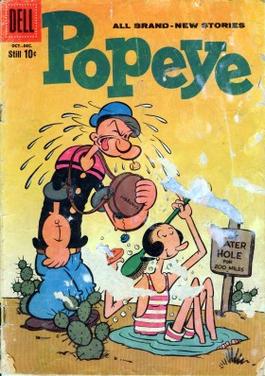
“I yam what I yam!”

Popeye’s catchphrase is an expression of American individualism; how we approach conflict is measurable through various personal styles - all in a cultural context.

Ron Kraybill, publisher of Riverhouse ePress, has released to trainers a free review copy of the 22 page Style Matters: The Kraybill Conflict Style Inventory. The inventory is a recently developed five-styles-of-conflict inventory used by business managers, organizational consultants, and conflict resolution trainers worldwide to teach conflict management skills.

Like the widely-used Thomas Kilmann Conflict Mode Instrument and a number other inventories, Style Matters is based on the Mouton-Blake Grid. However, Style Matters adds a unique feature making the instrument culturally sensitive [this is really a bonus!]. For example, users are instructed to identify whether they are from an individualistic (i.e. white, Anglo North American) or a collectivistic (i.e. black, Hispanic, indigenous) culture, and are given slightly differing instructions accordingly.

Another significant feature of Style Matters is that it gives users two sets of scores, one for “calm” conditions and one for “storm”, recognizing that many people’s style shifts under high stress. Some people who are high in Directing behaviors in the beginning of a conflict shift into Avoiding as stress mounts and others may shift from Avoiding to Directing.

Trainers and consultants may request a free review copy in PDF form, by sending a note indicating their organizational affiliation to StyleMattersOffer@RiverhouseEpress.com. A link to a PDF file will immediately be forwarded.

Even if you are not a trainer, here are some sample pages from Style Matters to take a look at – especially the fifth page!

To email me, click Perry S. Itkin.

Tuesday, August 29, 2006

“Food, Glorious Food!”

I wonder if Judge Pendelton Gaines of the Superior Court of Arizona, Maricopa County was humming the song “Food, Glorious Food” from Lionel Bart’s musical “Oliver!”, an adaptation of Charles Dickens’ classic, “Oliver Twist,” as he penned this decision granting Plaintiff’s Motion to Compel Acceptance of Lunch Invitation [really, I am not making this up!].

Here’s what happened. Plaintiff’s counsel extended a lunch invitation to Defendant’s counsel “to have a discussion regarding discovery and other matters.” Plaintiff’s counsel offered to “pay for lunch.” Defendant’s counsel failed to respond until the motion was filed [imagine that!]. Defendant’s counsel distrusted Plaintiff’s counsel’s motives and feared that Plaintiff’s counsel’s purpose is to persuade Defendant’s counsel of the lack of merit in the defense case.

I think you’ll find the judge’s ground rules creatively entertaining [even absent rock, paper, scissors]!

By the way, what’s the proper course of action for a mediator to follow if one of the lawyers during mediation lunch time offers to pay for the mediator’s lunch? Take a look at Florida’s Rules for Certified and Court-Appointed Mediators, Rule 10.330(c), Impartiality, Gifts and Solicitation which provides:

A mediator shall neither give nor accept a gift, favor, loan, or other item of value in any mediation process. During the mediation process, a mediator shall not solicit or otherwise attempt to procure future professional services.

But [and you know what that means!] be sure to read the Committee Note.

What about the mediator paying for the participants’ lunches? Take a look at Mediator Ethics Advisory Committee Opinion 2001-006.

Hmmm!?!?! What about no lunch?!?

To email me, click Perry S. Itkin.

Monday, August 28, 2006

"I'm From Missouri - Show Me!"

OK, I’m not really from Missouri, the “Show-Me State” [but you knew that!]. I wanted to let you know that I have just read How to Negotiate Like a Pro. In one compact work, Mary Greenwood has synthesized a cornucopia of information about negotiation. This book is important not only for negotiators but also for mediators. It’s easy to understand and contains a specific set of rules in a practical format. Each of the 41 rules is listed with a concise explanation of how and when to use it in negotiation. One of the nice features of this positive book is a script [which really illustrates that it is a “how to do it” book] at the end of each rule – actual language you can use during negotiation and adapt to a mediator skill set.

As I read through the 76 page paperback book [you can easily carry it in your briefcase] I had, in my mind’s eye, the different applications for mediators in asking questions, framing, reframing, recognizing negotiation tactics and, in general, facilitating negotiations. It’s lessons will work exceedingly well!

I thought you might like to know about this valuable resource!

To email me, click Perry S. Itkin.

Wednesday, August 23, 2006

“I Am A Croissant!”

OK, not a croissant; how about “I am a jelly doughnut!” OK, how about none of the above! One day we may find ourselves [if you haven’t already had the experience] mediating cases where there is a language barrier. Immediately you think – interpreter, right?!? Clearly that works [although not without pitfalls]. What about the necessity, though, for the mediator to build rapport with the disputing parties? How would you develop this in that scenario? How about speaking a phrase or two in the other language – at least trying to do so – that might do it. It’s fun to try if you have a good sense of what you’re about to say. Be careful, though, you certainly don’t want to mis-speak in the other language.

Remember 1963 [please say yes!]. In any event, after the Berlin Wall was built as a barrier to movement between East and West Berlin, President John F. Kennedy gave a memorable speech in West Berlin as morale boost for West Berliners who lived inside East Germany and who feared a possible East German occupation. He said:

Two thousand years ago the proudest boast was civis romanus sum [I am a Roman citizen]. Today, in the world of freedom, the proudest boast is ‘Ich bin ein Berliner.’ All free men, wherever they may live, are citizens of Berlin, and, therefore, as a free man, I take pride in the words ‘Ich bin ein Berliner!’

He said he was a citizen of Berlin [to build that rapport] although it was widely reported that he said he was a jelly doughnut [which, of course, he was not!]. His unmistakable accent may have lead to that urban legend.

Think about it for a minute – how do you feel when someone who isn’t fluent in your language tries to communicate with you in your language – feels kind of nice sometimes; don’t you begin to feel a tinge of rapport building?

To email me, click Perry S. Itkin.

Monday, August 21, 2006

Would You Do Something Like This?

According to this article from The Recorder as reported on Law.com, the California Commission on Judicial Performance last week publicly admonished a Riverside County judge who delayed a murder trial verdict so he could attend a baseball game.

Remember, Florida Rules for Certified and Court-Appointed Mediators, Rule 10.430 Scheduling Mediation provides:

A mediator shall schedule a mediation in a manner that provides adequate time for the parties to fully exercise their right of self-determination. A mediator shall perform mediation services in a timely fashion, avoiding delays whenever possible.

So, as a mediator would you do something like the Riverside County judge did? Naahhhh!

To email me, click Perry S. Itkin.

Sunday, August 20, 2006

“But, You Shouldn’t Have Done That! Pay The Mediator Anyway!”

The appellant in Areizaga v. Board of County Commissioners of Hillsborough County, et al., 2006 Fla. App. LEXIS 13672 [Fla. 2nd DCA 2006] failed to appear at a court ordered mediation [actually, an oral court order not reduced to writing – not that it made a difference here]. The trial judge ordered him to pay the bill of the mediator [a very good move!] as a sanction.

Florida Rule of Civil Procedure 1.720(b) allows the court to impose the sanction of payment of the mediator’s bill when a party fails to appear for a scheduled mediation without good cause. Among appellant’s defenses were the lack of a written order [not so fast held the Second District Court of Appeal!] and that the County failed to coordinate the date and time of mediation with him [the evidence showed otherwise – but, in any event, what’s the mediator’s coordination responsibility, if any?]

Appellant also argued that in light of Florida Rule of Civil Procedure 1.710(b), which prohibits mediation of extraordinary writs, mediation should never have been ordered. Yes, agreed the appellate court, but [and you know what that means!] appellant should not have ignored the court order and should have brought the issue to the attention of the trial court before the mediation – not afterward.

All to say, ultimately the order to mediate the extraordinary writ was quashed and appellant still had to pay the mediator [another very good move on a higher judicial level – Yessss!].

To email me, click Perry S. Itkin.

Friday, August 18, 2006

Archimedes – A Mediator!

Okay, Archimedes was really an ancient Greek mathematician, physicist, engineer, astronomer, and philosopher and not actually a mediator. He is credited with having said “Eureka!” [you know, “I have found it!”] following his discovery of the principles of density and buoyancy.

I wonder if “Eureka” could be a verb and, if so, I have “Eureka’d” 2 mediation employment opportunities in the 19th Judicial Circuit, Fort Pierce, Florida. One is for a Mediation Services Coordinator and the second is for a Circuit/Family Mediator. Take a look.

I thought you might be interested!

To email me, click Perry S. Itkin.

Thursday, August 17, 2006

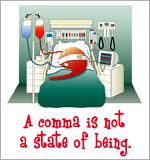
“Okay, Vanna, I’d Like To Buy A Comma For . . . .”

. . . . $2.13 million! You’re kidding right! Well, yes, however [and you know what that does!] it’s a real life Wheel of Fortune problem in an agreement which contained the following language [and punctuation]: The agreement

shall continue in force for a period of five years from the date it is made, and thereafter for successive five year terms, unless and until terminated by one year prior notice in writing by either party.

The second comma is the culprit here. When can this agreement be terminated? You’ll have to read this article in the Canadian newspaper The Globe and Mail to find out. Also, you might want to read this interesting analysis by Ken Adams in AdamsDrafting.

All to say, commas are important – watch out!

To email me, click Perry S. Itkin.

Sunday, August 13, 2006

Did You Know You Have The “It Factor”?

The whaat??? You know, the “It Factor”. No, I’m not referring to the euphemism for sex appeal used to describe the actress Clara Bow [the original “It Girl”] in 1927 – it’s much more than that. The “It” is charisma. We all have it – some have more than others. Charisma includes charm, personality, appeal, magnetism, and allure. An important personal quality, charisma enhances our mediator effectiveness and includes language use, non-verbal communication, and eye contact.

This article in the Sun-Sentinel offers some tips on how to develop more of the “It Factor”!

To email me, click Perry S. Itkin.

A Useful Primer

Many posts contain links to appellate opinions and I thought it might be helpful to suggest reading this essay by Orin Kerr [a professor at The George Washington University School of Law] on How to Read a Judicial Opinion. Although it’s a guide for new law students others might benefit from its helpful contents.

To email me, click Perry S. Itkin.

Friday, August 11, 2006

Point System Update For Circuit Civil Mediators

Wait – not that point system!

The Florida Supreme Court, in it’s opinion In Re: Petition of the Alternative Dispute Resolution Rules and Policy Committee on Amendments to Florida Rules for Certified and Court-Appointed Mediators, 931 So.2d 877 [Fla. 2006], adopted the new practical and non-profession-based point system for certified county court, family, and dependency mediators. However, the court was hesitant, at that time, without input from The Florida Bar, to remove the current requirement that a certified Circuit Court mediator must be a member of The Florida Bar or a retired trial judge from any U.S. jurisdiction and therefore retained this requirement pending comment from The Florida Bar.

The Florida Bar has submitted its comment. The ADR Rules and Policy Committee has 30 days after service of the Bar’s comment within which to respond.

Stay tuned for further developments!

Enjoy your weekend!

To email me, click Perry S. Itkin.

Thursday, August 10, 2006

“I Told You I Was Sick!”

The tombstone in the picture is actually located in the cemetery in Key West, Florida.

What does it have to do with mediation? Nothing really, and yet . . . . In the Fourth District Court of Appeal case of Marlowe v. Brown, et al., 2006 Fla. App. LEXIS 12852 [Fla. 4th DCA 2006], the appellate court framed this question: Does a “mediation settlement agreement” entered into at the beginning of the divorce case [i.e. a ‘mediation agreement for temporary relief’] control the distribution of property after the husband’s death [which occurred before the entry of a final judgment of dissolution of marriage]?

The agreement did not specify what would happen if one of the parties died during the pendency of the divorce action [would you have thought to include this type of provision?]. By the way, the husband, prior to his death, moved to set aside the mediation agreement contending that the agreement was procured by mediator misconduct and that the equitable distribution paragraph was merely an “agreement to agree”. Motion denied! Thereafter [well, not immediately thereafter – it was actually 9 months later], the husband died and there had been no final judgment of dissolution, no valuation of properties, and no plan of equitable distribution. Shortly after the husband died, the wife filed a motion to dismiss the divorce case. Another motion denied! Thereafter [well, not immediately thereafter – it was actually 22 months later], the wife died.

There was much more procedurally and, all to say, the appellate court answered the above question with a “no” and held that the dissolution of marriage action terminated with the death of the husband and the trial judge should have granted the wife’s motion to dismiss the case. The opinion is worth reading especially those sections which focus on the appellate court’s view of the mediation agreement.

So, even mediated temporary relief agreements need to be detailed and, as to certain contingencies, well . . . .

To email me, click Perry S. Itkin.

Wednesday, August 09, 2006

“What A Diff’rence A Day Makes”

No, not the 1959 album by Dinah Washington featuring the hit single by the same name! [You do remember the song, don’t you?!?]

Oh, well, in any event, the contract provision in dispute provided a set number of days within which a party was to make a payment. The final payment day fell on a Saturday. Payment was made on the following Monday. Was it timely? You’ll have to read the Second District Court of Appeal opinion, Metro Development Group, L.L.C. v. 3D-C & C, Inc., et. al, 2006 Fla. App. LEXIS 13029 [Fla. 2nd DCA 2006] to find out! Although the opinion does not involve mediation, the agreement drafting lessons to be learned make reading this opinion worthwhile.

Remember, Florida’s Rules for Certified and Court-Appointed Mediators, Rule 10.420(c) Conduct of Mediation, Closure, provides:

The mediator shall cause the terms of any agreement reached to be memorialized appropriately and discuss with the parties and counsel the process for formalization and implementation of the agreement. [Emphasis added.]

To email me, click Perry S. Itkin.

Tuesday, August 08, 2006

Are Mediation Fees A Marital Liability Or A Cost Issue?


The answer is . . . . According to the Second District Court of Appeal in Smith v. Smith, 2006 Fla. App. LEXIS 12843 [Fla. 2nd DCA 2006], mediation fees are not a marital liability for purposes of equitable distribution as defined in F.S. 61.075(5). In this divorce case the trial court allocated to the Husband, as a marital liability, $1,960 in mediation fees paid by the Husband. Not so fast said the appellate court!

If the parties were referred to mediation by court order, the apportionment of mediation fees should have been stated in the order of referral pursuant Fla. Fam. L. R. P. 12.740(c). In this case, since the mediation fees were apparently not addressed in a mediation order, they should be addressed as a cost issue under F.S. 61.16(1).

This makes sense doesn’t it?!? If the cut-off date for determining assets and liabilities to be identified or classified as marital assets and liabilities is the earliest of the date the parties enter into a valid separation agreement, such other date as may be expressly established by such agreement, or the date of the filing of a petition for dissolution of marriage and the court ordered the parties to mediation [i.e. after the filing of a petition, how could mediation fees be a marital liability?].

Do you think the outcome would be different if the parties attended pre-suit mediation?

To email me, click Perry S. Itkin.

Saturday, August 05, 2006

Become A Florida Supreme Court Certified Mediator – A Step By Step Guide!

In May of 2006, the Florida Supreme Court issued opinion SC05-998 which temporarily instituted two options to qualify as a Florida Supreme Court certified mediator. These options are available only from August 1, 2006 – August 1, 2007. In order to assist applicants in understanding both options for certification, the Dispute Resolution Center has created a Step By Step Guide which outlines the requirements for each option.
This is a valuable resource - take a look!

To email me, click
Perry S. Itkin.

Friday, August 04, 2006

“Turn, Turn, Turn” - A Negotiation Technique

Do you remember the rock band The Byrds and their 1965 number one hit Turn, Turn, Turn? How clever of them to introduce those lyrics as a negotiation technique!

Okay, not exactly! However, in Lisa Bracken’s article Turn Objections into Concessions and Adversaries into Advocates in Corporate Negotiations appearing in The Negotiator Magazine, we can see the application of the “negotiation turns” concept, frequently referred to as “reciprocity”.

The article “reveals the inherent complexity of the objection and examines ways in which you can work more cooperatively with your adversary in creating mutual accord.”

It is well-written, contains useful examples of how to implement the technique and is worth reading several times!

Oh, by the way, I thought I’d experiment by adding [from time to time] a picture to my posts. What do you think about that idea? Also, I'm trying a new font - how do you like it? Please let me know - thank you.

To email me, click
Perry S. Itkin.

Thursday, August 03, 2006

“Remember Me?”

Well, not me exactly – I’m referring to the interests of persons affected by mediated settlement agreements. Florida Rules for Certified and Court-Appointed Mediators, Rule 10.320, Nonparticipating Persons provides:

A mediator shall promote awareness by the parties of the interests of persons affected by actual or potential agreements who are not represented at mediation.

Although this Fourth District Court of Appeal case did not involve mediation, Koenig v. Theofilos, 2006 Fla. App. LEXIS 12841 [Fla. 4th DCA 2006] demonstrates the essence of the rule.

Likewise, in Falco v. Bridgestone/Firestone North AmericaTire LLC, 2006 Fla. App. LEXIS 12826 [Fla. 1st DCA 2006] the First District Court of Appeal reminds us that the trial judge, pursuant to F.S. 744.387, must authorize a settlement proposed on behalf of a ward in order for the settlement to be effective.

All to say, there’s lots for mediators to think about – isn’t there?

To email me, click Perry S. Itkin.

Wednesday, August 02, 2006

“We Are Not Kidding!”

In an earlier post I highlighted a Fifth District Court of Appeal case in which the appellate court imposed sanctions against the appellee and his lawyer for failing to comply with its appellate mediation order. Guess what?!? It’s baaack!

In Hernando County School Board v. Nazar, 31 Fla. L. Weekly D 1776 (FL 5th DCA 2006) appellant filed a notice of non-compliance, indicating that Appellee’s attorney has paid one-half of the mediator’s fee, but the remaining half has not been paid by the appellee. In addition, the notice indicates that its reasonable attorney’s fees and costs have not yet been paid.

The Fifth District ordered that Appellee’s answer brief will be stricken and the court shall make a determination on the merits of this appeal without consideration of the contents of that brief if appellee does not pay the mediator’s fee within 15 days.With regard to the unpaid attorney’s fees and costs, the court directed Appellant’s counsel to schedule a hearing before the trial judge, acting as a commissioner to determine the reasonable amount of costs and fees, which shall then be promptly paid, fifty percent by Appellee and fifty percent by Appellee’s attorney.

In view of the history of this case thus far, what do you think the future holds for Appellee and his attorney?

Stay tuned [but really, I hope there is nothing more to say due to actual compliance]!

To email me, click Perry S. Itkin.

Tuesday, August 01, 2006

What Do Mediators And Hangmen Have In Common?

They both belong to a profession! How about that?!? Look, in each field, among other things, there are:

Rules of procedure
Ethics
Selection processes
Requirements to be skillful under pressure
Confidentiality standards
Good moral character [really!] issues
Billing record requirements

According to this article from BBC News, being a hangman was one of the hardest jobs to get [sound vaguely familiar?].

Okay, so just what [or who] is a “professional mediator”? Here is an interesting article by Jeff Kichaven to help you answer the question and give you information you can use while debating the subject.

To email me, click Perry S. Itkin.

Friday, July 28, 2006

Small Talk Is Really Big Talk!

Small talk may be defined as the art of making conversation for the sake of making conversation. However, in fulfilling our role as mediators, small talk is really “big talk” as you will see in this article by Susan RoAne.

Remember, among the concepts we learned in mediation training is for the mediator to understand the importance of demonstrating empathy, building rapport, establishing trust, setting a cooperative tone, demonstrating neutrality and impartiality, demonstrating sympathetic listening and questioning, empowering parties and remaining non-judgmental. A tall order, indeed! It can be accomplished, in part, through “schmoozing” – i.e. small talk.

So, are you a good “schmoozer?”

Enjoy the weekend; you've earned it!

To email me, click Perry S. Itkin.

Thursday, July 27, 2006

Pre-Trial Mediation Given New Meaning!

In the British case of Dr. S. R. Burne v. A [2006] EWCA 24 the Court of Appeal ordered the parties to attend mediation before a re-trial could be held in this eight year old case. Lord Justice Sedley said:

“On the issue before us there are powerful arguments either way and I express no view whatsoever as to the eventual outcome. I do, however, feel very strongly that this is a case which must be referred to alternative dispute resolution before it is restored for the re-trial. Both parties should take stock of the strengths but also the weaknesses of their respective cases which are now plain for all to see and I hope mediation will bring a swift conclusion to a tragic event.”

To email me, click Perry S. Itkin.

Wednesday, July 26, 2006

The Top 10 Reasons Not To Mediate

This is not the Late Show David Letterman’s Top 10 – these belong to Philip S. Cottone of the Property Trust Advisory Company and, while the focus is on mediation in the securities industry, it has application across the board [not the Big Board i.e. stock exchange, the mediation board – sorry, I couldn’t resist]. Here are the top 10 and you can download them [and some very interesting commentary] by clicking on this link from the Practicing Law Institute which is an excerpt from PLI’s Course Handbook Securities Arbitration 2005: Telling Your Story #6855.

The Top 10:

1. Saying I want to mediate will show weakness to the other side and telegraph I think I have a weak case.

2. I have a slam dunk case and there is no point in mediating.

3. I don’t want to show my case to the other side before trial.

4. The case is too complex.

5. The parties (or the lawyers) are too emotionally involved to sit down together.

6. It will be a waste of time.

7. The case will not settle because the other side is unreasonable and will not listen until we get to the courthouse steps.

8. My client doesn’t want to mediate.

9. I have to spend the time preparing for trial, and at trial I have the best chance of getting a good award for my client.

10. I can do it better myself.

So, you’ve never heard these before – right?!? Naahh!

To email me, click Perry S. Itkin.

Tuesday, July 25, 2006

Challenges Of “The Profession”

“The Profession” referred to by former Florida Supreme Court Justice Major Harding is the legal profession. In his keynote address at the General Assembly at the Florida Bar’s Annual Convention in Boca Raton last month he identified several challenges and what lawyer’s could do to meet them. His important commentary has equal applicability to the mediation profession as well! As you read this article in the Florida Bar News, think about the points he makes in the context of mediation.

Along similar lines, is this thank you editorial in The Daily Commercial from Judge Donna Miller to Lake County’s County Court volunteer mediators who clearly are mindful of Florida’s Rules for Certified and Court-Appointed Mediators, Rule 10.690(a), Advancement of Mediation, Pro Bono Service which provides:

Mediators have a responsibility to provide competent services to persons seeking their assistance, including those unable to pay for services. A mediator should provide mediation services pro bono or at a reduced rate of compensation whenever appropriate.

How about you?!?

To email me, click Perry S. Itkin.

Monday, July 24, 2006

Who’s Sorry Now?

Can you hear the music? Okay, maybe this will help – the song Who’s Sorry Now? was written in 1923 long before it became a hit for Connie Francis and, believe it or not, was sung by the Marx Brothers in their movie A Night In Casablanca! What the song had to do with the movie is anyone’s guess and what all of this has to do with mediation, well . . . .

I know – you’ve already figured it out – the power of an apology! Excellent! The concept of “full disclosure/early offer” as a policy for settling medical malpractice cases has proven effective according to this article in The National Law Journal. The key to the policy lies in the open exchange of information, particularly between experienced counsel, that enables the early settlement of meritorious claims.

To email me, click Perry S. Itkin.

Friday, July 21, 2006

My Mouth Is Moving But My Body Is Doing Most Of The Talking!

Studies have shown that the first impression is based 7 percent on what you say, 38 percent on the tone of your voice, and 55 percent on your body language according to this article by Judith Early in Lawcrossing. Although the article focuses on job interviews, it provides a good explanation of how some basic body language can be interpreted and excellent tips mediators can use to project confidence. Take a look!

Have a nice weekend!

To email me, click Perry S. Itkin.

Thursday, July 20, 2006

It’s Not Clear And I’m Not A Party – Why Am I In Contempt?

In Tsokos, et al. v. Sunset Cove Investments, Inc., 2006 Fla. App. LEXIS 11806 [Fla. 2nd DCA 2006] appellants petitioned the Second District Court of Appeal for a writ of prohibition quashing an order to show cause why they should not be held in indirect criminal contempt for their willful disobedience of, and interference with, the final judgment in a lawsuit to which they were not parties. The final judgment incorporated all the provisions of a mediated settlement agreement and the trial court retained jurisdiction to enforce them. Because the final judgment did not proscribe the conduct forming the basis of the order to show cause, the appellate court granted the petition and ordered that no further proceedings be held on the order to show cause.

The final judgment did not expressly prohibit [and apparently neither did the mediated settlement agreement – what’s the lesson here?] a third party [the appellant in this case] from purchasing the real property which was the subject of the litigation after the closing date incorporated into the final judgment.

To email me, click Perry S. Itkin.

Wednesday, July 19, 2006

Unconscious Mediation!

Well, not really but it could have helped where a man in eastern India uttered the Urdu word for divorce [“Talaq”] three times in his sleep thereby accidentally divorcing his wife according to the religious leaders in West Bengal state as reported in this Associated Press article.

Does this give “no fault divorce” new meaning? Not so fast!

In an earlier post I noted that the High Court in Kerala has said that under Muslim law, mediation should be undertaken before using the Talaq option in divorce. Hmmm! What if the man first had a dream about family mediation with his wife and then, in the same dream, gave “Talaq?” Would the “divorce” then be valid? What do you think [or am I just ‘dreaming’ – sorry, I couldn’t resist]?

To email me, click Perry S. Itkin.

Tuesday, July 18, 2006

MEAC Opinion 2006-002 – Now Online!

Here’s a summary of MEAC Opinion 2006-002 which provides a succinct analysis of the importance of party self-determination and drafting the agreement:

Mediation of a small claims case resulted in impasse. Thereafter, the County Court judge instructed the parties on trial procedures and how s/he was likely to rule in an effort to urge them to settle. The judge then “suggests” that the parties return to a “second” mediation. The mediator in the “second” mediation must carefully monitor the parties’ participation in the mediation to ascertain their ability to exercise self-determination and must be prepared to terminate the mediation if any party is unable or unwilling to participate meaningfully in the process. In the context of small claims mediation, where the parties may not be familiar with the traditional court process and may be intimidated by the proceedings, a mediator is not relieved of ethical responsibilities by writing the “agreement” up as a “scrivener”.

Remember Florida’s Rules for Certified and Court-Appointed Mediators, Conduct of Mediation, Closure, Rule 10.420(c) provides:

The mediator shall cause the terms of any agreement reached to be memorialized appropriately and discuss with the parties and counsel the process for formalization and implementation of the agreement.

The Committee Notes to that Rule provide, in part:

Florida Rule of Civil Procedure 1.730(b), Florida Rule of Juvenile Procedure 8.290(o), and Florida Family Law Rule of Procedure 12.740(f) require that any mediated agreement be reduced to writing. Mediators have an obligation to ensure these rules are complied with, but are not required to write the agreement themselves.

So, since context is important, do you think MEAC would reach a similar conclusion if the parties were represented by counsel in any type of mediation, whether it’s small claims, civil county court, circuit civil, family or dependency? What if one [or both] party is pro se? What if . . . ? Keep thinking about this!

To email me, click Perry S. Itkin.

Tuesday, July 11, 2006

Albert Einstein – Mediator!

Well, not really; although he could have been. You see, Albert Einstein had a formula for success in life which demonstrates the importance of effective listening in communication. The formula is a=x+y+z.

a=success
x=work
y=play

When asked what “z” was, Einstein mischievously remarked “That, my dear sir, is ‘keeping your mouth shut.’” All to say, knowing when to be quiet is as important in knowing what your mind should be doing when your mouth is “shut” – listening critically.

Since most of effective communication involves listening, determine your listening quotient by taking this test to learn if you need to become a better listener.

If you find you need some “listening help”, take a look at these top ten tips for becoming a better listener from Coachville or these Strategic Listening tips from Witt Communications.

To email me, click Perry S. Itkin.

Monday, July 10, 2006

Back To Basics!

The First District Court of Appeal reminds us, in Hale v. Shear Express, Inc., 2006 Fla. App. LEXIS 10056 [Fla. 1st DCA 2006], that to be enforceable, a settlement agreement must reflect assent by the parties to all essential terms; if any remain open, subject to future negotiation, there can be no enforceable contract. But, you knew that – right?!?

You’ve heard it before – “We’ll prepare and exchange releases later.” Uh oh! Now what?

This isn’t the first time the First District Court of Appeal called this to our attention – see my earlier post on the issue.

To email me, click Perry S. Itkin.

Thursday, July 06, 2006

It’s Still Just A Duck – Not Mediation!

In an earlier post I noted that some ADR processes are called mediation when, in fact and practice, they are not mediation at all! So, what on earth is “binding mediation?”

In the California case of Lindsay v. Lewandowski, 2006 Cal. App. LEXIS 821 [Cal.App. 4th 2006] the court explored the differences between mediation and arbitration and “binding mediation”. In the case on appeal, the parties reached a mediated settlement on all but two terms. The payment terms were left up in the air and the parties also agreed “in the event of a dispute as to the terms of the settlement the parties agree to return to the mediator for final resolution by . . . .” Here is where the communication broke down. One version said binding arbitration, but had a line through it, and was replaced by the word “mediation.”

Here’s how the mediator described the procedure he intended to use to resolve the parties’ disagreement [this was not a good mediator move] over the payment terms of the settlement he had mediated: “[T]he parties have agreed in advance that in the event the parties fail to agree, I then decide these terms and conditions, typically by asking the parties to each submit to me their final offers, accompanied by their oral argument as to why I should select their version over all others. I then select as the final binding provision the term or terms of either one party or the other.” [Sounds like arbitration to me – baseball arbitration, actually!]

There are significant problems with the concept of “binding mediation.” Among them are:

What rules apply – the arbitration rules, the court-ordered mediation rules, the mediation confidentiality rules, or some mix?

If only some rules, how is one to chose?

Should the trial court take evidence on the parties’ intent or understanding in each case?

Three justices on the Court of Appeal were flabbergasted, and one of the concurring justices called the term “binding mediation” oxymoronic [I agree!].

All to say, call the process what it really is – arbitration; it is not mediation, just a duck! [You know if it looks, walks and quacks like a duck - it’s a duck!]

Please read and re-read this excellent opinion. How would you, as the mediator, have handled the parties’ disagreement?

To email me, click Perry S. Itkin.

Tuesday, July 04, 2006

Places Of Worship, Public Policy And Mediation

Along the east coast of the United States the locations of places of worship are being mediated - one in Boston, Massachusetts [according to this article in The Boston Globe] and one in Hollywood, Florida [according to this article in The Miami Herald]. In these two instances all participants agree that direct communication between the parties works best and that court was not the place to resolve the disputes. "Fish bowl" mediation has its benefits! The common theme is that once the foundation of understanding is established, options can be created and resolution achieved [buttressed by some stern encouragement, i.e. a trial commencement deadline, from a judge]. Imagine that!

To email me, click Perry S. Itkin.

Monday, July 03, 2006

They Said What?!?

The Florida Supreme Court in In re: Petition To Adopt Florida Rules For Certification And Regulation Of Court Interpreters and Florida Rule Of Judicial Administration 2.073, 2006 Fla. LEXIS 1394 [Fla. 2006] adopted Florida Rules for Certification and Regulation of Court Interpreters and a new Florida Rule of Judicial Administration, Rule 2.073, Appointment of Interpreters for Non-English-Speaking Persons, in response to the recent enactment of chapter 2006-253, Laws of Florida.

So, what does this have to do with mediation? Nothing, exactly and yet . . . .

One of the fundamental learning objectives in mediation training programs is to “[i]dentify techniques for mediating cases where there is a language barrier or when a translator participates in the mediation session.” I interpret [pun intended – sorry!] the word “translator” here to mean interpreter. These new rules give mediators valuable insight into what professional conduct is expected of a certified court interpreter and, hence, what we can expect of them if they participate in mediation.

Additionally, Part IV, Discipline, in these new rules delineates the conditions under which disciplinary action may be taken against a certified court interpreter. The discipline may take the form of suspension or revocation of certification. Rules 14.410-14.460 set forth a detailed disciplinary process based loosely on those applicable to mediators. See Florida Rules for Certified and Court-Appointed Mediators 10.810-10.880. Hmmm, how about that?!?

Since we have the benefit of such a wonderfully diverse cultural population here, I thought this would be an appropriate post for the 4th of July! Enjoy the holiday and stay safe!

To email me, click Perry S. Itkin.